Fire Stopping Guide
Fire Stopping FAQs: What You Need To Know Before Choosing A Product
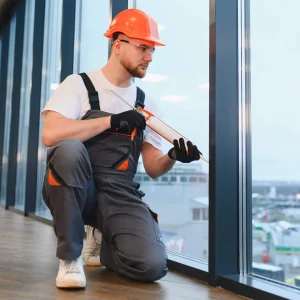
Fire stopping is one of the most important parts of passive fire protection. It helps maintain fire compartmentation by sealing gaps, joints and service penetrations that could otherwise allow fire, smoke and hot gases to spread through a building.
Unlike active fire protection systems, such as sprinklers or alarms, fire stopping does not extinguish a fire. Instead, it helps contain it. This gives occupants more time to evacuate, protects escape routes and helps limit damage to the building.
In this guide, we answer some of the most common fire stopping questions, including what fire stopping is, which products are used, who can carry out the work and what to consider before choosing a fire stopping product.
What Is Fire Stopping?
Fire stopping is the process of sealing openings, gaps and penetrations in fire-rated walls, floors and ceilings using suitable fire-resistant products.
These openings are often created when building services pass through compartment walls or floors. Common examples include:
- Pipes
- Cables
- Cable trays
- Ductwork
- Conduits
- Trunking
- Ventilation services
- Service risers
- Construction joints
- Gaps around walls, floors and ceilings
If these openings are not properly sealed, they can compromise the fire resistance of the surrounding structure. Fire stopping helps reinstate the performance of that compartment line.
Why Is Fire Stopping Important?
Fire stopping helps prevent fire and smoke from spreading beyond the area where a fire starts. This is important because hidden gaps can allow smoke and flames to travel quickly through walls, floors, ceiling voids and service routes.
Effective fire stopping can help:
- Protect escape routes
- Slow fire spread
- Reduce smoke movement
- Maintain compartmentation
- Protect structural elements
- Support evacuation
- Limit property damage
- Improve building safety compliance
Fire stopping is a key part of a building’s passive fire protection strategy and should be considered whenever walls, floors, ceilings or service routes form part of a fire-rated compartment.
Is Fire Stopping The Same As Fireproofing?
No. Fire stopping and fireproofing are related, but they are not the same thing.
Fire stopping seals gaps, joints and penetrations to help stop fire and smoke spreading between compartments.
Fireproofing is a broader term that can refer to protecting structural elements, materials or surfaces from fire exposure.
For example, fire stopping may be used around a pipe penetration through a wall, while structural fire protection may be used to protect steelwork.
Is Fire Stopping Active Or Passive Fire Protection?
Fire stopping is part of passive fire protection.
Passive fire protection is built into the structure of a building and does not require activation. It includes products and systems such as:
- Fire stopping sealants
- Fire batts
- Pipe collars
- Pipe wraps
- Fire stopping compound
- Cavity barriers
- Fire doors
- Fire-rated walls and floors
- Fire-resistant boards
Active fire protection systems, such as alarms, sprinklers and smoke control systems, usually need activation or detection to operate.
What Are The Main Methods Of Fire Stopping?
Fire stopping is not one single product. It is a combination of tested systems selected according to the application, opening size, service type and required fire rating.
Common fire stopping methods include:
Fire Rated Sealants And Mastics
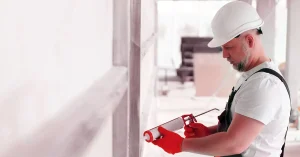
Fire rated sealants are used to seal smaller gaps, linear joints and service penetrations.
They are commonly used around:
- Pipes
- Cables
- Conduits
- Small service openings
- Perimeter gaps
- Fire batt edges
- Wall and floor joints
Some sealants are intumescent, meaning they expand when exposed to heat. Others are designed for flexibility, movement or weather resistance.
Pipe Collars And Pipe Wraps
Pipe collars and pipe wraps are used around combustible pipework, especially plastic pipes.
During a fire, plastic pipes may soften or melt. Intumescent collars and wraps expand under heat to help close the opening left behind, maintaining the fire barrier.
They are commonly used around:
- Plastic waste pipes
- Soil pipes
- Drainage pipes
- Service penetrations through walls and floors
Fire Batts
Fire batts are coated mineral fibre boards used to seal larger openings where services pass through fire-rated walls and floors.
They are often used where multiple services pass through the same opening, such as cables, pipes and trays.
Fire batts are usually installed with compatible fire rated sealants around the edges and service penetrations.
Fire Stopping Compound
Fire stopping compound is a cementitious or gypsum-based product used to seal larger openings, particularly in floors.
Once cured, it forms a hard fire-resistant barrier. Some compounds may also provide a load-bearing seal depending on the product and tested application.
It is commonly used for:
- Floor openings
- Service risers
- Larger penetrations
- Areas requiring a robust permanent seal
Fire Pillows
Fire pillows are flexible fire stopping products used where services may need to be changed, removed or added later.
They are often used in environments where access and future modifications are important, such as:
- Data centres
- Plant rooms
- Server rooms
- Electrical rooms
- Temporary service penetrations
Fire pillows should still be installed as part of a tested system and checked regularly to ensure they remain correctly positioned.
Cavity Barriers
Cavity barriers are used to close or subdivide concealed cavities within walls, floors, roofs and façades.
They help reduce the spread of fire and smoke through hidden spaces that may otherwise bypass compartment lines.
Which Fire Stopping Product Do I Need?
The correct fire stopping product depends on the exact application.
Before choosing a product, consider:
- What type of wall, floor or ceiling is being penetrated
- Whether the opening is in a fire-rated element
- What services pass through the opening
- Whether the services are combustible or non-combustible
- The size of the opening
- The required fire rating
- Whether movement is expected
- Whether acoustic performance is needed
- Whether future access is required
- Whether the system has suitable test evidence
A pipe collar may be suitable for a plastic pipe, while fire rated sealant may be suitable for a small linear joint. A large multi-service opening may need fire batt or fire stopping compound instead.
The key is to select a tested system, not just a product that looks similar.
What Are Service Penetrations?
Service penetrations are openings created when services pass through walls, floors or ceilings.
Examples include:
- Pipe penetrations
- Cable penetrations
- Ductwork penetrations
- Conduit penetrations
- Cable tray penetrations
- Trunking penetrations
Service penetrations are common in almost every building, but they can create weak points in compartmentation. Fire stopping reinstates the fire resistance around those services.
Can I Use Expanding Foam For Fire Stopping?
Only use expanding foam if it is a fire-rated product and it has suitable test evidence for the exact application.
Standard expanding foam is not a fire stopping product. Even some fire-rated foams have limited approved uses, so they should not be used as a general substitute for tested fire stopping systems.
For many applications, products such as fire rated sealant, pipe collars, pipe wraps, fire batts or compound may be more suitable.
Can I Mix Different Fire Stopping Brands?
Mixing different brands within the same fire stopping system is generally not recommended unless there is clear test evidence or manufacturer guidance confirming compatibility.
Fire stopping products are usually tested as complete systems. This means the sealant, batt, collar, wrap, backing material and installation detail may all form part of the tested performance.
Mixing products from different manufacturers can create uncertainty and may cause issues during inspection, handover or future compliance checks.
Who Can Carry Out Fire Stopping Work?
Fire stopping should be carried out by competent installers who understand the products, test evidence and installation requirements.
Incorrect installation can seriously reduce the performance of the system.
A competent installer should understand:
- Product datasheets
- Tested details
- Fire ratings
- Substrate requirements
- Service types
- Opening sizes
- Backing materials
- Manufacturer instructions
- Recording and labelling requirements
For commercial, public and multi-occupancy buildings, fire stopping should not be treated as basic snagging or general decorating work.
How Often Should Fire Stopping Be Inspected?
Fire stopping should be inspected regularly as part of the building’s fire safety management and maintenance process.
It should also be checked whenever:
- New services are installed
- Existing services are moved
- Refurbishment work takes place
- A wall, floor or ceiling is altered
- Damage is identified
- A fire risk assessment highlights concerns
- There has been water damage, impact damage or building movement
Annual inspections are often used as a practical baseline, but some buildings may need more frequent checks depending on risk, use and occupancy.
What Should A Fire Stopping Inspection Look For?
A fire stopping inspection should identify whether compartment lines have been maintained and whether installed systems remain intact.
Common issues include:
- Missing fire stopping
- Unsealed gaps
- Damaged sealant
- Loose or missing collars
- Incorrect pipe wraps
- Poorly fitted fire batts
- Unsupported services
- Mixed or unverified products
- Unlabelled installations
- Oversized openings
- Penetrations added after original works
- Fire stopping removed during maintenance
Any defects should be repaired using suitable tested products.
What Is Early Engagement In Fire Stopping?
Early engagement means considering fire stopping during the design and planning stage, rather than leaving it until the end of the project.
This helps avoid costly remedial work and reduces the risk of unprotected penetrations being missed.
Early engagement can help with:
- Coordinating service routes
- Reducing oversized openings
- Selecting compatible systems
- Avoiding clashes between trades
- Planning access for installation
- Improving documentation
- Reducing rework
- Supporting smoother inspection and handover
Fire stopping is easier, cleaner and often more cost-effective when it is planned properly from the start.
Why Is Fire Stopping Documentation Important?
Fire stopping records help prove what has been installed, where it has been installed and which products were used.
Useful records may include:
- Product name
- Manufacturer
- Fire rating
- Location
- Installation date
- Installer details
- Photos before and after installation
- Product datasheets
- Test evidence
- Inspection reports
- Maintenance records
This information is valuable for building owners, contractors, responsible persons, fire risk assessors and future maintenance teams.
What Happens If Fire Stopping Is Missing Or Incorrect?
Missing or incorrect fire stopping can allow fire, smoke and hot gases to spread through a building much faster than expected.
This can affect:
- Escape routes
- Occupant safety
- Compartmentation
- Firefighting access
- Property protection
- Insurance requirements
- Building handover
- Compliance responsibilities
It can also lead to costly remedial works if discovered during inspection or after services have already been installed.
How Fire Protection Direct Can Help
Fire Protection Direct supplies a wide range of passive fire protection and fire stopping products, including fire rated sealants, fire batts, pipe collars, pipe wraps, fire stopping compound, fire sleeves and cavity barriers.
Whether you need to seal a small service penetration or specify products for a larger project, our team can help you find suitable fire stopping products for the application.
FAQs
What is the purpose of fire stopping?
The purpose of fire stopping is to seal gaps, joints and service penetrations so fire and smoke cannot easily spread between fire compartments.
Is fire stopping a legal requirement?
Fire safety duties apply to many non-domestic and shared residential premises. The responsible person must assess fire risks and take suitable fire precautions. Building work may also need to meet Building Regulations guidance such as Approved Document B.
What products are used for fire stopping?
Common products include fire rated sealants, pipe collars, pipe wraps, fire batts, fire stopping compound, fire pillows, cavity barriers and fire-resistant boards.
Can anyone install fire stopping?
Fire stopping should be installed by competent people who understand the tested system, product instructions and required fire rating.
How long does fire stopping last?
Service life depends on the product, environment and whether the installation is damaged or disturbed. Fire stopping should be inspected regularly and repaired if defects are found.
Can fire stopping be removed?
Fire stopping should not be removed unless suitable replacement fire stopping is installed. This is especially important when services are changed or added.
What is a fire stopping system?
A fire stopping system is a tested combination of products, materials and installation details designed to maintain fire resistance in a specific application.